Sewer Line Repair Help for Worried Homeowners
A damaged sewer line can show up as a backup, a bad smell, or drains that gurgle and slow down. It is stressful, especially when it happens in a basement. The good news is that most problems can be found with a camera and fixed with a plan that fits your pipe and your yard.
Jeanentering Septic is a referral service. We do not do the repair work. We help you connect with independent providers in our network who serve the Shelton area. A local provider can look at the line, explain the options in simple words, and give you a written quote. This page walks you through the first hour, the signs to watch for, how repairs work, and what to ask.
Sewer Backup? Start Here
Water coming up through a drain is scary. Take one slow breath. You can get through this one step at a time. It often looks worse in the first few minutes than it turns out to be.
Step One: Stop Adding Water
Stop using sinks, showers, the dishwasher and the washer. Do not flush. Every drop you add has to go somewhere. If the line is blocked, that place may be your floor drain or tub.
Step Two: Keep Everyone Safe
Sewage carries germs. Keep kids and pets out of the wet area. Wear rubber gloves and boots if you must go in. If water covers the floor near outlets or the electric panel, stay out and ask a pro about power.
Step Three: Breathe, Then Document
Take photos of the water, the drains and anything damaged. Write down the time, which drains are affected, and what was running when it started. Notes make estimates easier.
Signs of a Sewer Line Problem
Backups are the loud sign. Quiet signs come first, and spotting them early gives you more choices.
- Slow drains in more than one room
- Toilets that gurgle when you run the sink
- A sewage smell in the basement or yard
- Soggy, extra green or sunken patches in the lawn
- Water in the basement floor drain
One Drain or Many?
One slow sink is often a small clog inside the house. Several fixtures acting up together points to the main line. Tell the provider which one it is.
What Damages Sewer Lines
Tree roots find tiny cracks and push in looking for water. Old pipe made of clay, cast iron or fiber can crack, flake or collapse with age. Grease and wipes build up and block flow.
Cold Ground and Heavy Water
Frost and thaw cycles move soil, and moving soil can pull joints apart. Spring snowmelt and coastal storms soak the ground and add weight and pressure on buried pipe.
Older Homes Have Older Pipes
Homes with stone or block foundations often have pipe passing through the wall, a spot that can crack or shift. Multi-family houses may share one line, so a problem can spread fast.
Is It the Sewer Line or the Septic System?
If your home is on septic, the pipe from the house to the tank is part of this picture. A provider may also check whether the tank is full. That can mean septic tank pumping, emergency septic cleaning or drainfield repair, which have their own pages. If a water well sits near the pipe run, ask about water well service checks too.
How Sewer Line Repair Works
Camera Inspection
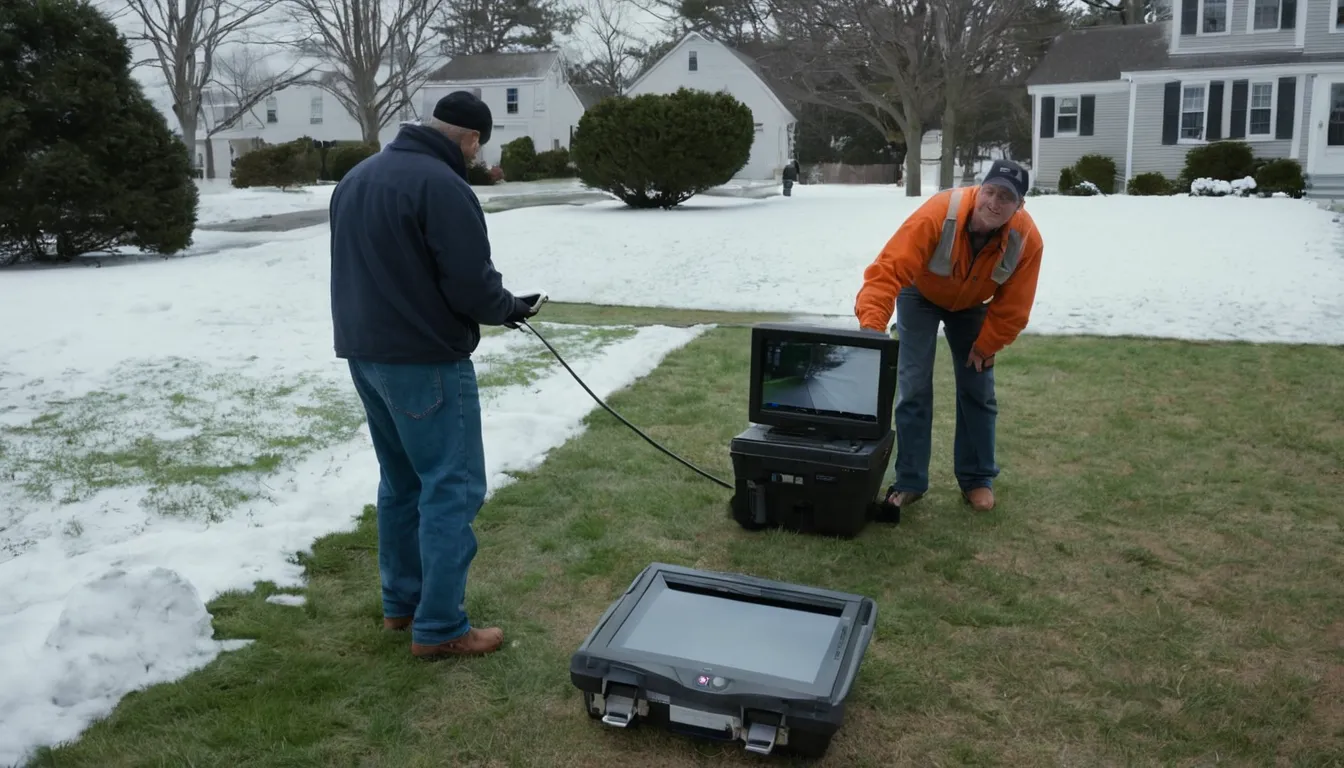
A provider feeds a small camera into the line. You see the crack, root or sag on a screen. This replaces guessing.
Finding the Exact Spot
A locator tool finds the depth and path of the pipe from above ground. That helps limit digging.
Repair Choices
- Spot repair: dig down and fix one short section.
- Lining: a sleeve is cured inside the old pipe, with little digging.
- Pipe bursting: a new pipe is pulled through as the old one breaks apart.
- Replacement: old pipe is dug out and new pipe goes in.
Ask which fits your pipe and why.
Permits and Property Lines
Many towns require a permit for sewer work, and some require an inspection afterward. Ask the provider who pulls the permit. Also ask where your part of the pipe ends. In many places the homeowner owns the line up to the street connection, but rules vary. Your town office can confirm.
Restoring Your Yard
Digging leaves marks. Ask before work starts what will be dug up, where soil will be piled, and who handles grass, walkways or driveway patches. Trenchless methods often disturb less ground.
Keeping Your Sewer Line Healthy
Flush only toilet paper. Keep grease out of drains. Watch large trees near the line. A camera check every few years on older pipe can catch trouble while it is small.
Questions to Ask the Provider
- What did the camera show, and can I see the video?
- Which repair do you suggest, and why?
- What does the written quote include?
- Who handles the permit?
- How will the yard be restored?
Paperwork for Insurance Talks
Some policies may cover sudden damage, and many do not cover wear or root growth. Check your policy. Providers can often help document damage for a claim. Keep your photos, notes, quotes and receipts in one folder.
What's Included
Camera Line Inspection
A small camera shows the crack, root or sag inside the pipe so you see what is wrong.
Line Locating
A tool finds the pipe's path and depth, which helps limit digging.
Spot Repair or Lining
Providers can fix one damaged section or line the pipe with little digging.
Full Line Replacement
When pipe is badly worn or collapsed, a provider can replace the run with new pipe.
Typical Sewer Line Repair Costs
Prices vary by pipe length, depth, soil, access and local rules. These are typical U.S. ranges only. Always get a written quote from the provider before work begins.
| Service | Typical range | Notes |
|---|---|---|
| Camera inspection | $100 – $500 | Often done before any repair plan |
| Clog or root clearing | $150 – $700 | May come back if the pipe is cracked |
| Cleanout installation | $1,000 – $3,000 | Makes later access easier |
| Spot repair | $1,500 – $5,000 | Depends on depth and digging |
| Trenchless lining | $3,000 – $12,000 | Less digging; depends on length |
| Full line replacement | $3,000 – $25,000 | Longer runs and permits cost more |
How It Works
Stop and Stay Safe
Stop using water, keep people and pets away from sewage, and take a slow breath before the next step.
Photos and Notes
Photograph the damage and write down times and affected drains for the provider.
Reach a Provider
Request a callback to check provider availability, or request an estimate.
Review the Plan
Look over the camera findings and written quote before you say yes.
Why Call Jeanentering Septic
Clear, Plain Explanations
Providers in our network can explain what the camera shows in simple words.
Local Know-How
Local providers understand frost, snowmelt and the older pipes common in this region.
No Obligation
Request an estimate and compare. You decide what to do next.
Written Quotes
Ask for the scope, price and permit details in writing before work starts.
Other Services
Need sewer line repair in Shelton?
Tell us what is happening, and Jeanentering Septic will point you to an independent provider in our network. Request an estimate with no obligation, or Request a callback to check provider availability.
No obligationSewer Line Repair FAQ
- What should I do first if my sewer line backs up?
- Stop running water and do not flush. Keep people and pets away from the wet area. Take photos, write notes, then reach a local provider to inspect the line and explain the options.
- How do I know if the problem is my sewer line?
- If several drains are slow, toilets gurgle, or the basement floor drain backs up, the main line is likely involved. One slow sink is usually a smaller clog nearby.
- Does homeowners insurance cover sewer line repair?
- It depends on your policy. Some may cover sudden damage, while wear and tree roots are often excluded. Check your policy, and keep photos, notes and quotes together for your claim.
We service you here
Shelton Trumbull Center Orange Bethlehem Village Oakville Meriden Naugatuck New Haven Derby Norwalk Bridgeport
Tell us what happened
Tell us what is happening, and Jeanentering Septic will point you to an independent provider in our network. Request an estimate with no obligation, or Request a callback to check provider availability.
No obligation